
BENEATH THE BELT AND ROAD— UNPACKING CHINA’S INVESTMENT IN JAMAICA
By Andre Huie
In a world of globalisation and a rapid rise in nationalism, much focus has been on China’s involvement around the world. Due to the rich cultural heritage and ethnic ties, very few countries in the Americas exemplifies the tight bond and friendship with China than Jamaica. Long before Jamaica was an independent nation, the island began forging ties with China as far back as 1854 when the first indentured labourers from Guangdong arrived, some 20 years after slavery was abolished in the English-speaking Caribbean. Since then, a journey of survival has been rapidly transformed into a multibillion-dollar geopolitical reality. Once Jamaica gained independence in 1962, Chinese-Jamaicans were not only an integral part of a small multi-ethnic young nation, but a crucial part of the island’s economic prowess. The intertwining of the Chinese diaspora into the economic and social fabric of Jamaica, presents the perfect backdrop for China to invest heavily into the local economy, most notably through major infrastructure projects. This set the pace for Jamaica joining China’s Belt and Road Initiative (BRI) on April 11, 2019, becoming one of the first Caribbean nations to sign onto the global infrastructure and development programme.
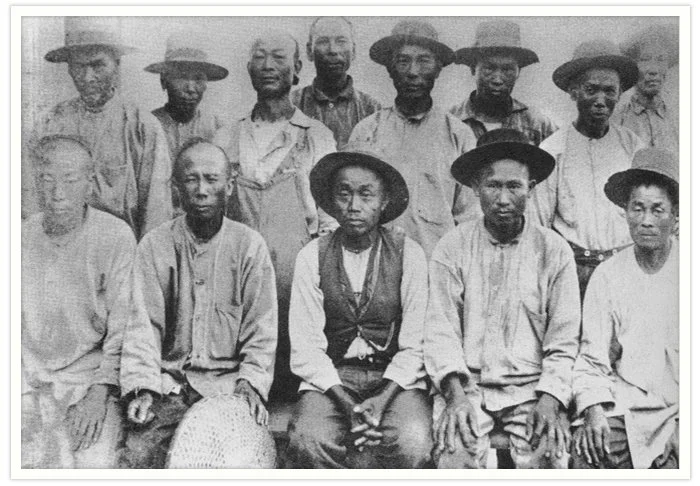
Early Chinese labourers arriving in Jamaica post slavery. (Photo: Jamaicans.com)
Since then, Chinese enterprises, have financed and delivered several major infrastructure projects designed to boost economic growth, improve transportation, and support trade and agricultural exports. These include:
1. North-South Highway (Highway 2000), which was completed in 2016 ahead of Jamaica's formal entry into the BRI. Built by Chinese companies, the highway significantly reduced travel time between Kingston and the tourism hub of Ocho Rios.
2. Following the 2019 agreement, cooperation expanded into other sectors. Chinese company JISCO (Jiuquan Iron and Steel Company) invested in Jamaica's bauxite industry after acquiring the Nain refinery, with plans for extensive upgrades and the development of a major industrial park and special economic zone in the island's southwest.
3. Chinese investment has also supported public infrastructure, including the construction of the Western Children's Hospital in Montego Bay, as well as urban redevelopment and other community projects.
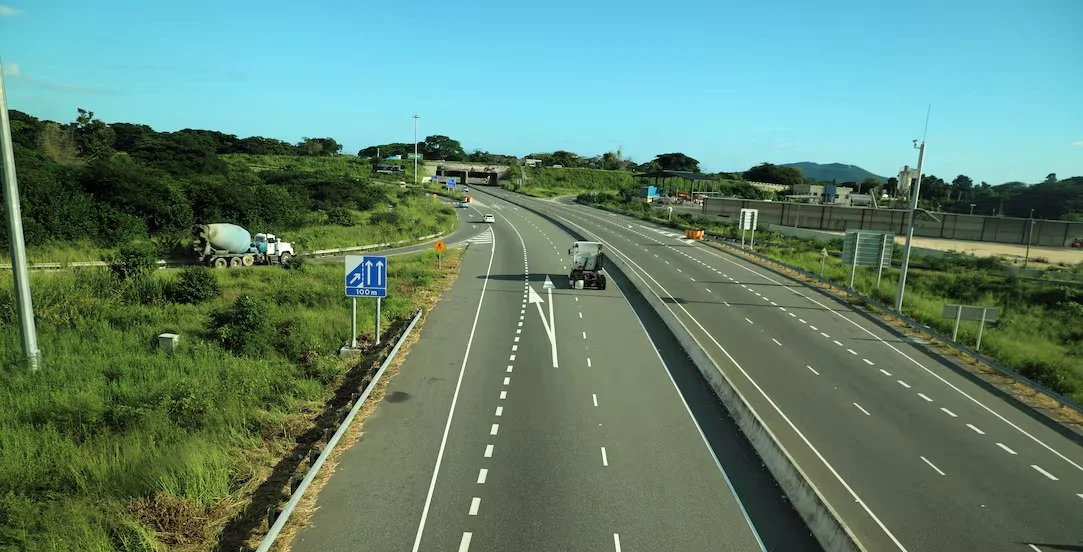
A section of the North South Highway in Jamaica. (Photo: David Common/CBC)
This is an investigation into who truly benefits from Jamaica’s rapid, China-funded modernization—and whether the injection of global capital is empowering the Jamaican worker, or simply enriching the international contractor.
Veteran broadcast Journalist Milton Walker, in offering his assessment on the value and significance of these projects to Jamaica, looks at the pros and the cons. Firstly, Walker believes all of the projects done by the Chinese are very important to Jamaica. “They have been extremely significant. The Three Miles flyover has transformed traffic at Jamaica's busiest intersection. The North-South Highway has reduced travel time between Kingston and Montego Bay from more than four hours to roughly two-and-a-half hours.
The highway has:
Improved movement of goods
Encouraged new businesses
Improved transportation options
Opened up new opportunities for housing and commercial development.
Likewise, the South Coast Highway has helped unlock economic opportunities in St. Thomas,” he explained. “None of these projects could be considered "white elephants." They were all badly needed and should have been completed decades earlier.”
From a technical and financial perspective, these Chinese-funded projects offer some benefits to the government and by extension the people of Jamaica. Richard Mullings, President of the Master Builders Association of Jamaica, speaks to this as one of the benefits, noting that local contractors are also exposed to new construction techniques, that can help bolster the resilience of public infrastructure. “The positive parts of having major Chinese infrastructure companies in Jamaica is exposing us to other methods and techniques for doing construction. From the government side, I'm not fully aware of the details, but I understand there seems to be some form of financing or allowances for getting projects done without the same strain on the government coffers as with previous projects,” Mullings said.
NOT ALL THAT GLITTERS....
But there are some drawbacks, Walker noted, from the Chinese projects. One of the most notably issues, is the impact they have on local contractors. The transfer of knowledge from China Harbour Engineering (CHEC), is little to non-existent. “One of the biggest concerns has been technology and knowledge transfer. Jamaica does not have contractors on the scale of China Harbour Engineering. Government has required Chinese firms to subcontract portions of projects to local companies, but there have been challenges,” the journalist disclosed. “Some local contractors struggled with aspects of the work, although those issues are gradually being addressed. I believe government should intentionally help develop a few large Jamaican contractors so they can eventually become equal partners and eventually lead major infrastructure projects themselves.”
Mr. Mullings of the Master Builders Association of Jamaica, share similar sentiments. “A lot of these techniques, methods and potential knowledge transfers are only gained by happenstance—if we're lucky enough to observe them or if unskilled labourers pick them up while working on the projects,” he said. “Our government hasn't insisted, that foreign firms coming in should provide mandatory knowledge transfer. That became especially concerning when projects are funded with Jamaican tax dollars, yet there is no dedicated requirement for knowledge transfer so that alongside infrastructure development, we also develop our people.”
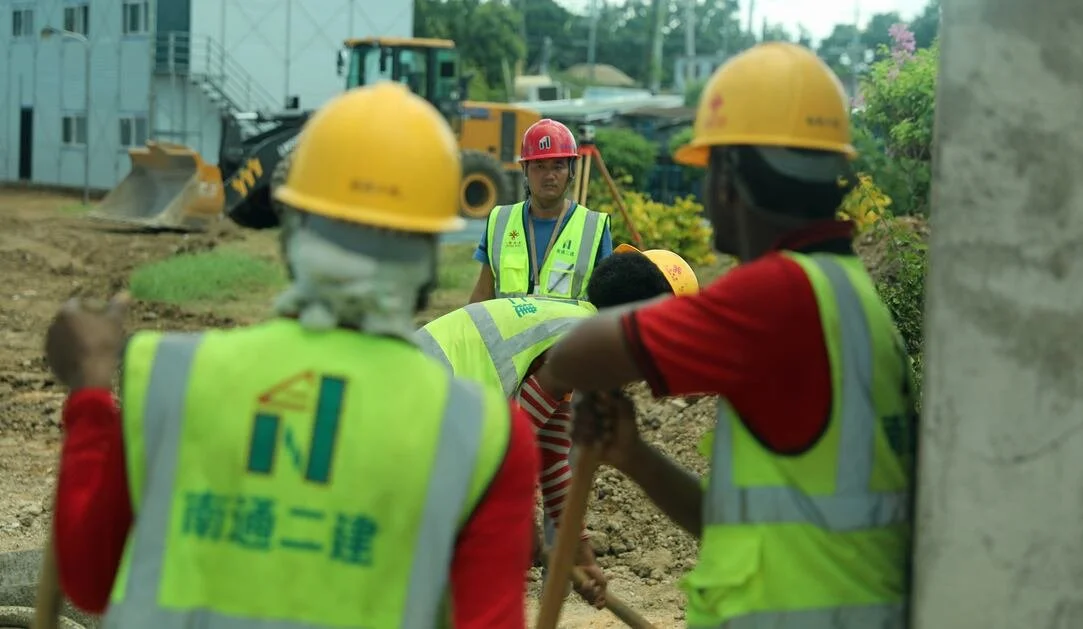
Chinese workers on construction site. (Photo: David Common/CBC)
Another huge issue with Chinese funded projects in Jamaica is the lack of transparency. The media and the public have very little knowledge on some important matters pertaining to the project. Trying to get information from government agencies or even representatives from China Harbour Engineering are oftentimes very challenging and an exercise in futility. “One challenge for journalists is that Chinese companies tend to communicate very little. Occasionally they'll issue a statement when something significant happens, but they generally avoid regular engagement with the media or holding press conferences. Greater openness would certainly help,” Milton Walker said. Efforts by Television Caribbean to speak to the Government of Jamaica or persons involved with Chinese funded projects were unsuccessful.
ENVIRONMENTAL CONCERNS
With any major development, environmental impact assessments should be part of the planning process. This to mitigate any impact the projects may have on the environment. “Most large infrastructure projects inevitably generate environmental concerns. The key is ensuring those impacts are minimized while still allowing the country to develop,” Walker said.
In recent years however, there have been not only environmental concerns but also historical and cultural impacts on some of these projects in Jamaica. One of the most controversial China-funded projects that exemplify these concerns is the Mammee Bay Housing Project. Originally conceived under as a hotel development in 2014, the plans were revived in 2017 into a housing project slated for over 800 residences. But the project has sparked protest and opposition from an environmental group: The Jamaica Beach Birthright Environmental Movement (JaBBEM). They called for the Government to halt the development, staged peaceful protests near the site and even threatened to take the matter to court to have the project stopped.
But how did China Engineering (CHEC) come upon this project? According to information reported by local media, the land was granted to CHEC by the Jamaican government as part of a 50-year, $700-million concession agreement to build the North-South Highway. That highway serves to transform the north coast corridor near Ocho Rios into a modern urban center to meet the demand for housing and commercial spaces, accommodating up to 4,000 residents.The project is funded through foreign direct investment by CHEC as part of their highway concession deal, alongside private real estate development.
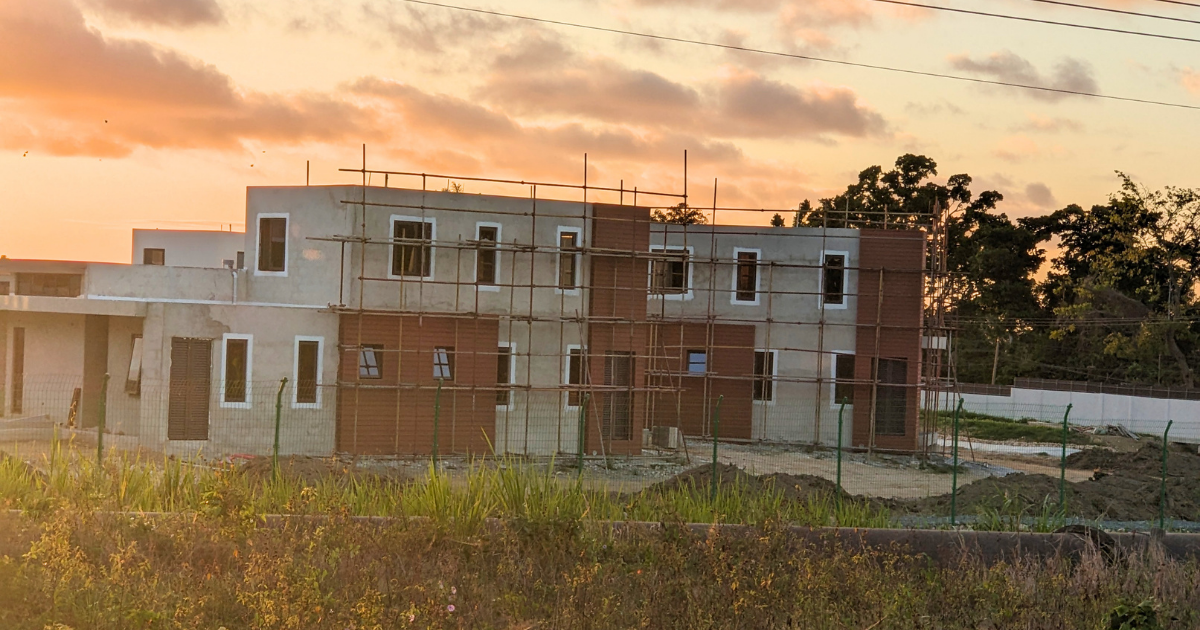
A section of the controvertial Chinese-built luxury housing project in Mammee Bay, St. Ann. (Photo: Andre Huie/Television Caribbean)
While JaBBEM acknowledges the importance of the highway to the government development plans, the organisation asserted that there are serious environmental, ecological and cultural heritage concerns. “Our fight is not against development. Our fight is against exploitation,” said Dr. Devon Taylor, founding member and president of JaBBEM. “Projects like these primarily benefit foreign interests and wealthy investors while dispossessing local communities. Road construction creates opportunities for more coastal tourism developments that extract wealth from Jamaica rather than benefiting ordinary Jamaicans. Real progress means consulting citizens and developing the country together—not imposing projects that damage the environment and marginalize communities. Our struggle is ultimately about protecting our land, our water, our rights and our future.”
Protecting our water? Yes! JaBBEM argues that the Mammee Bay project is a threat to the water supply of surrounding communities in the Parish of St. Ann. Damion Coombs is JaBBEM’s Outreach Officer. He took us to Roaring River, which he explained annexes the project’s construction site. He argues that the project restricts access to the river and a nearby beach and encroaches on the source of water supply to several communities. “This river supplies water to the Steer Town community, which has a population of roughly 10,000 people. Although the pumping infrastructure may not be state-of-the-art, it functions well and remains an essential resource,” Coombs said. The concern is that the proposed private community will effectively privatize this river and its surrounding environment. Instead of serving the wider public, the river, forests and natural landscape will become amenities reserved for a small, wealthy community. This represents the privatization of ecology itself.”
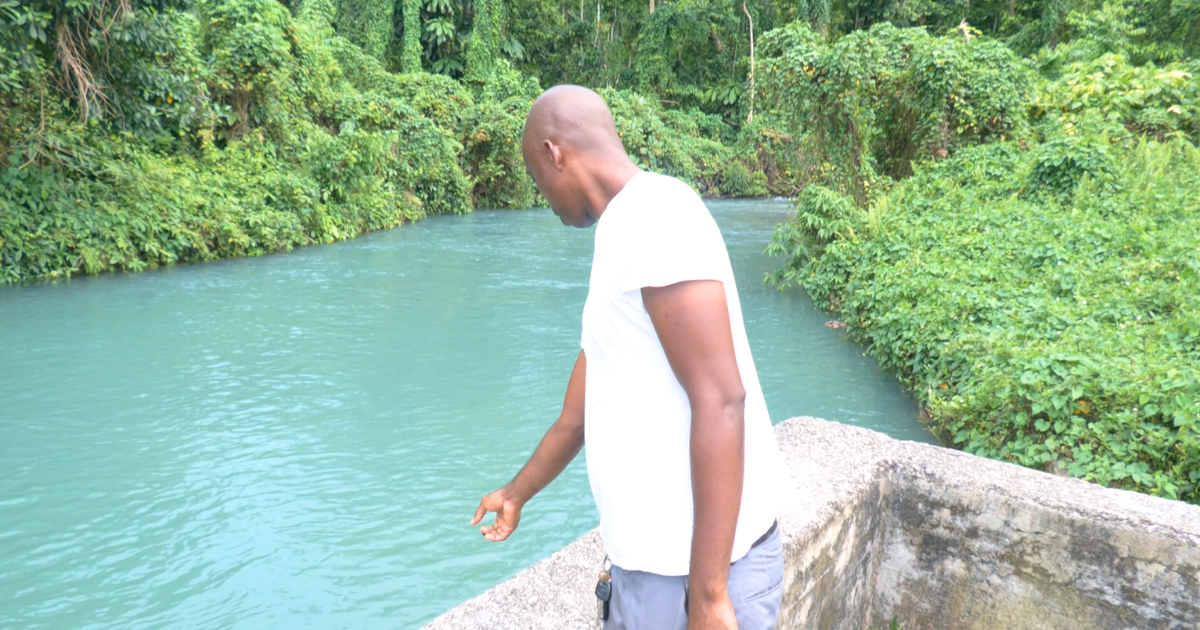
JaBBEM Outreach Officer Damian Coombs stands at Roaring River, one of the waterways environmental advocates say could be impacted by the Mammee Bay housing development. (Photo: Andre Huie/Television Caribbean)
Dr. Taylor argued that CHEC had commenced destruction of part of the Rio Bueno watershed on the Roaring River Estate in St Ann in preparation to construct the luxury housing development,” based on environmental permits granted by the Government. “The land sits on the Rio Bueno watershed. Since many watersheds across Jamaica are already degraded, we were worried about what this development would mean for our water supply and rivers,” Dr. Taylor told Television Caribbean.
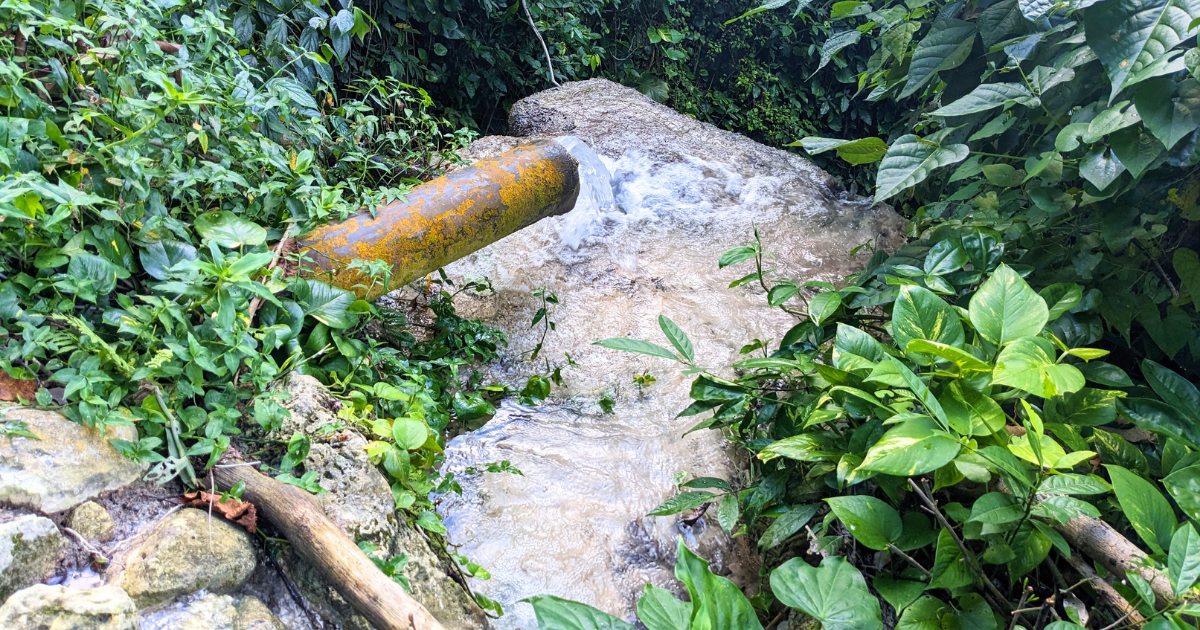
Water flowing from Roaring River, St. Ann. (Photo: Andre Huie/Television Caribbean)
HISTORICAL AND CULTURAL IMPACT
The Mammee Bay Project, opponents argue, also negatively impacts the cultural heritage of the community through its relationship with the river and other parts of the environment. “People have used it for generations—for swimming, recreation and connecting with nature. Downstream is a place known as Goldie Hole, and the river feeds into Laughing Water Beach, which has long been enjoyed by residents of Steer Town and visitors from across Jamaica. Today, access to areas surrounding the river and beach have become restricted because of the development by China Harbour Engineering Company. For many of us, growing up here, we never imagined that access to these natural spaces would one day be denied,” Coombs disclosed.
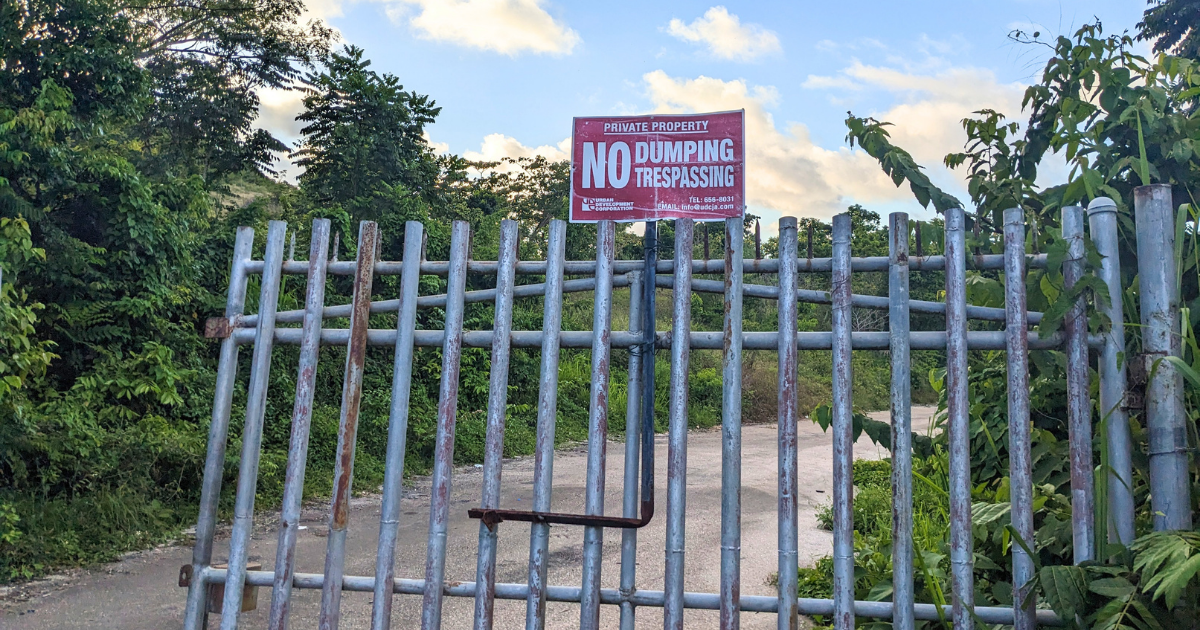
A No Trespassing sign on an iron gate leading to property that, according to activists, were freely accessed by residents. This is located close to the Mammee Bay Housing Project.
Dr. Taylor shares similar concerns. “The site also has historical significance. Research suggests that the Roaring River Estate was where the parents of Jamaica's first National Hero, MarcusGarvey, lived and where Garvey himself spent much of his childhood. Those environmental, cultural and historical concerns made the proposal deeply disturbing to us,” he said.
Given these concerns, did local authorities sought to address these issues? “Public consultations were held and community members, environmental organizations and residents strongly opposed the project. Formal written submissions were made to the National Environment and Planning Agency (NEPA). However, there was no revised Environmental Impact Assessment to address the substantive concerns,” Dr. Taylor disclosed. “From our perspective, the government never intended to stop the project.”
DISLOCATION
Some Chinese infrastructure projects in Jamaica, not only impacts the environment or heritage preservation, but also have significant social impacts. The Montego Bay Perimeter Road is one such example. Some people who live within the vicinity of the project, have had to relocate as the land where their houses were built were needed for the road construction. The Jamaica Information Service (JIS) disclosed that the Montego Bay Perimeter Road Project is a US$274-million infrastructure initiative aimed at easing severe traffic congestion across St. James. While the project was targeted for final completion in 2026, the land acquisition phase required to build the 15-kilometre bypass has directly triggered residential and commercial dislocation across several communities. Negotiations with homeowners are handled by the National Road Operating and Constructing Company Limited (NROCC). In a Jamaica Gleaner article, published in May 2025, Opposition Spokesperson on Housing and Sustainable Living, Professor Floyd Morris, called on Prime Minister Dr Andrew Holness to intervene and engage with the homeowners in Montego West Village in St James who are in the pathway of the Montego Bay Perimeter Road Project.
He said there are 16 homeowners who are likely to lose their homes or see significant encroachment on their properties. “The homeowners received communication from the Ministry of Economic Growth and Job Creation, which falls under the responsibility of the Prime Minister, indicating that their properties are likely to be affected. These individuals have subsequently seen surveys done that will result in substantial reductions of the size of their properties that were built by Gore Development Ltd and paid for by mortgages from the National Housing Trust. The loss of value that these homeowners will suffer is significant,” says Morris.
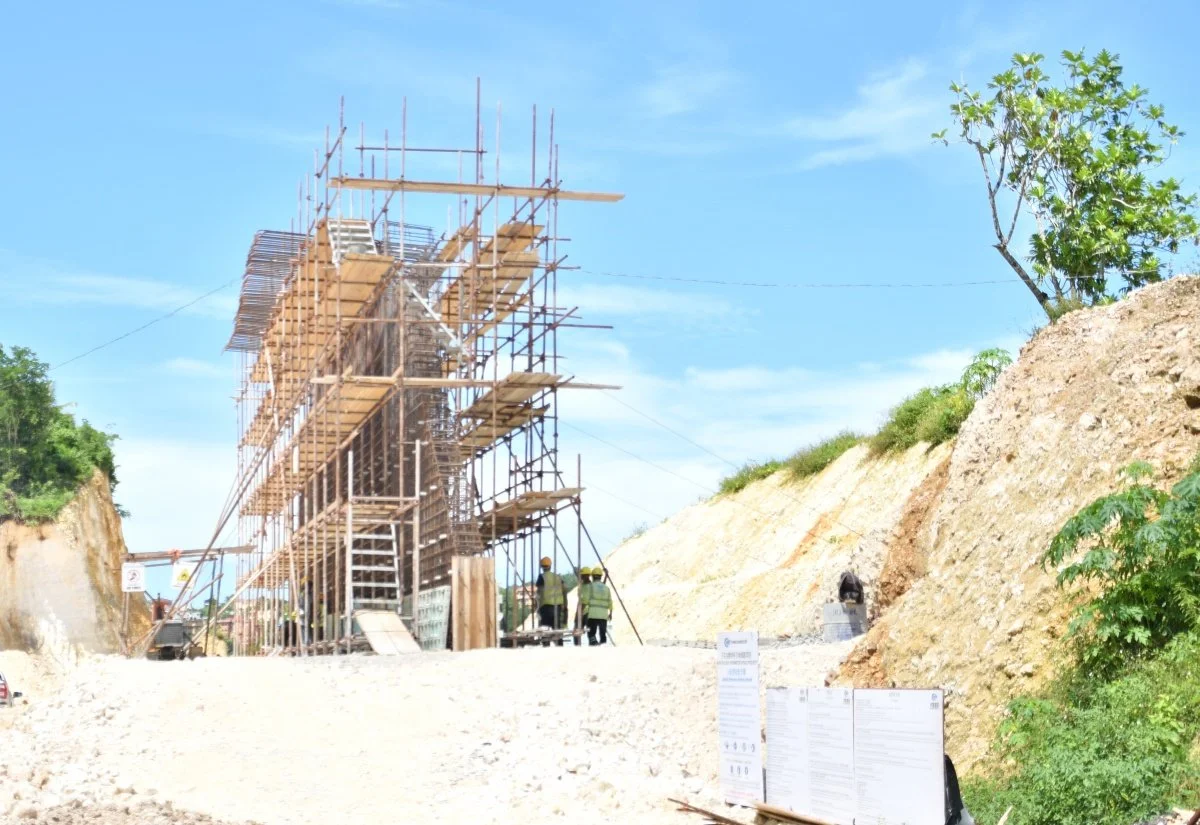
Construction work on the Montego Bay Perimeter Road. (Photo: JIS)
Later that year, Minister without Portfolio in the Ministry of Economic Growth and Infrastructure Development with Responsibility for Works, Robert Morgan, according to a Jamaica Information Service article, assured that the Government’s approach to the Montego Bay Perimeter Road project is grounded in fairness and due process.
“We do not want to use compulsory acquisition, unless it is a last resort. We want to ensure that both the developer and the landowners are happy with the outcome,” he said.
However, unlike some homeowners who have expressed displeasure at being relocated and have criticized the process of land acquisition, one homeowner in Montego Bay who spoke to our news team, identified only as Andre, has a different story. He had recently built his house and had just moved in when he was informed that he had to relocate due to the road construction. While the timing was inconvenient, he felt the process and the eventual outcome is more advantageous to his personal situation. “Honestly, I have nothing bad to say as it relates to NROC. I'm not saying I'm happy that I've lost my property,” Andre said. He disclosed that due to changes in the initial project plan, it was necessary to acquire his property. “They even tried their best to prevent it. But based on the realignment, that's what really caused the situation. Initially, they didn't have any plan here until some realignment took place. And that's why I was then affected,” he explained. “In the negotiation or within the time of conversing with them back and forth, I asked them, is there any way to exclude me? And based on the realignment and so forth, I was just dead centre (in the project). So, I had to just accept the fact that I'll be gone at some point from this property.” Andre said he will be relocated to another housing project that was newly built and he is satisfied with the arrangement. The Montego Bay Perimeter Road, at the time of writing has missed its initial deadline for completion and construction cost has increased. The government blames this mostly on the passage of Hurricane Melissa, which impacted parts of the island, including St. James where Montego Bay is located.
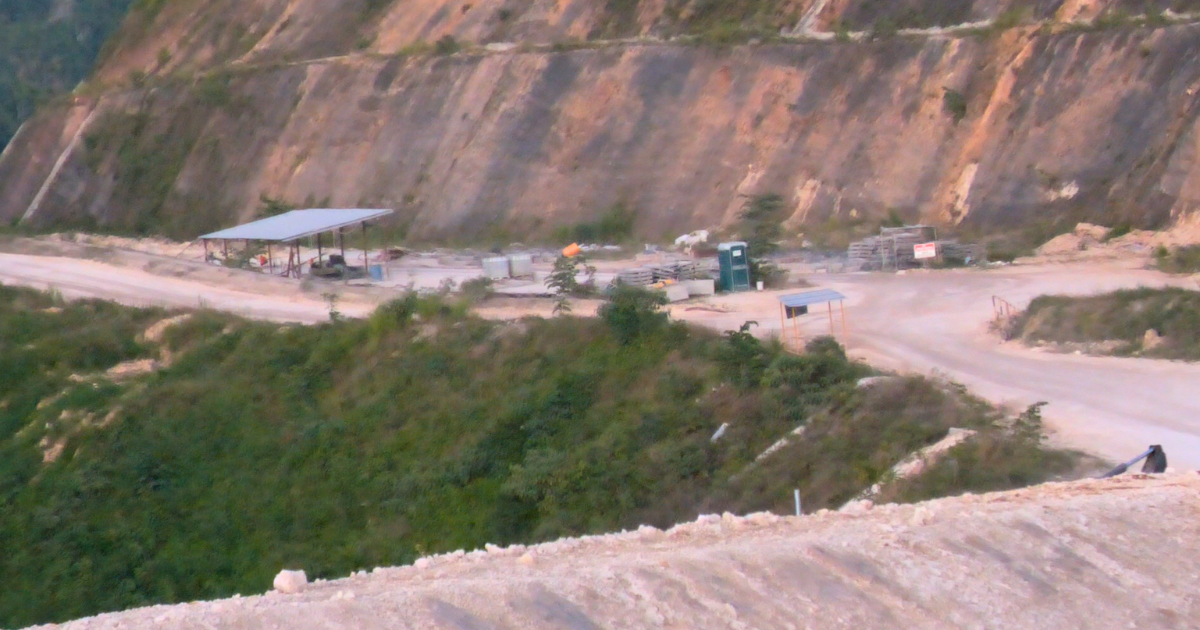
Road works on the Montego Bay Perimeter Road adjacent to Andre’s house. (Photo: Andre Huie/Television Caribbean)
There’s no doubt that Jamaica has benefitted significantly from the many public infrastructure projects built by China Harbour Engineering. Many have attested to the quality of the roads and the important role they play in alleviating traffic congestion while lessening travel time between parishes. This by extension lends to greater efficiency, more productivity and increased economic output. But for many residents caught in the path of development, progress has come at a deeply personal cost. As with every development, there is need for balance: the ability to manage the challenges of improved quality of life, with fairness, transparency and meaningful consultation. Time will tell if the current and future projects under the Belt and Road Initiative in Jamaica, will adopt that path.
(Sections of this article comprised information from the Jamaica Information Service, The Jamaica Gleaner and the National Environmental Protection Agency NEPA.)
